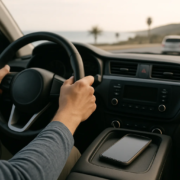
A San Diego Crash May Reveal Distracted Driving Evidence
A driver looks down at a phone for only a moment. Ahead, traffic slows near an intersection, a cyclist enters a crosswalk, or another vehicle changes lanes. That brief loss of attention can become the key issue in an injury claim. But how can you prove distracted driving caused a San Diego crash rather than merely show that the driver owned or used a phone?
In San Diego, California, evidence must usually connect the suspected distraction to the collision itself. Jeffrey Estes Injury Lawyers can help injured people understand what information may matter and how it may fit with the crash investigation. This article explains the types of evidence that may support causation and liability, what an injured person can preserve or report, and why private individuals should not attempt to obtain restricted phone records on their own.
How to Prove Distracted Driving Caused a San Diego Crash
Distracted-driving cases often turn on timing. Evidence is more useful when it shows what the driver was doing immediately before the impact and how that conduct affected the driver’s ability to see, react, brake, or maintain a lane.
Phone-related evidence and digital records
A driver’s phone may contain information about calls, messages, app activity, or other use. However, a phone’s existence does not prove it caused a crash. The important question is whether evidence places the activity close enough to the collision to support a reasonable connection.
An injured person should generally preserve photographs, videos, messages, and other information already lawfully available to them. They should not access another person’s device, guess passwords, impersonate someone, or try to obtain private carrier records independently. Depending on the circumstances, an attorney may seek relevant records through formal legal procedures, while law enforcement may conduct its own investigation.
Evidence showing the driver’s conduct
Other evidence may help establish distraction, including:
- Statements by the driver, passengers, or witnesses about phone use or another activity inside the vehicle.
- Dashcam, traffic-camera, business-security, or nearby residential video showing the driver looking down or failing to react.
- Photographs of the vehicles, roadway, visibility conditions, and final positions after the collision.
- Data from a vehicle’s event recorder or connected system, when available and legally obtainable.
The goal is not to label a driver based on suspicion. It is to assemble reliable facts that explain the crash sequence in San Diego, California.
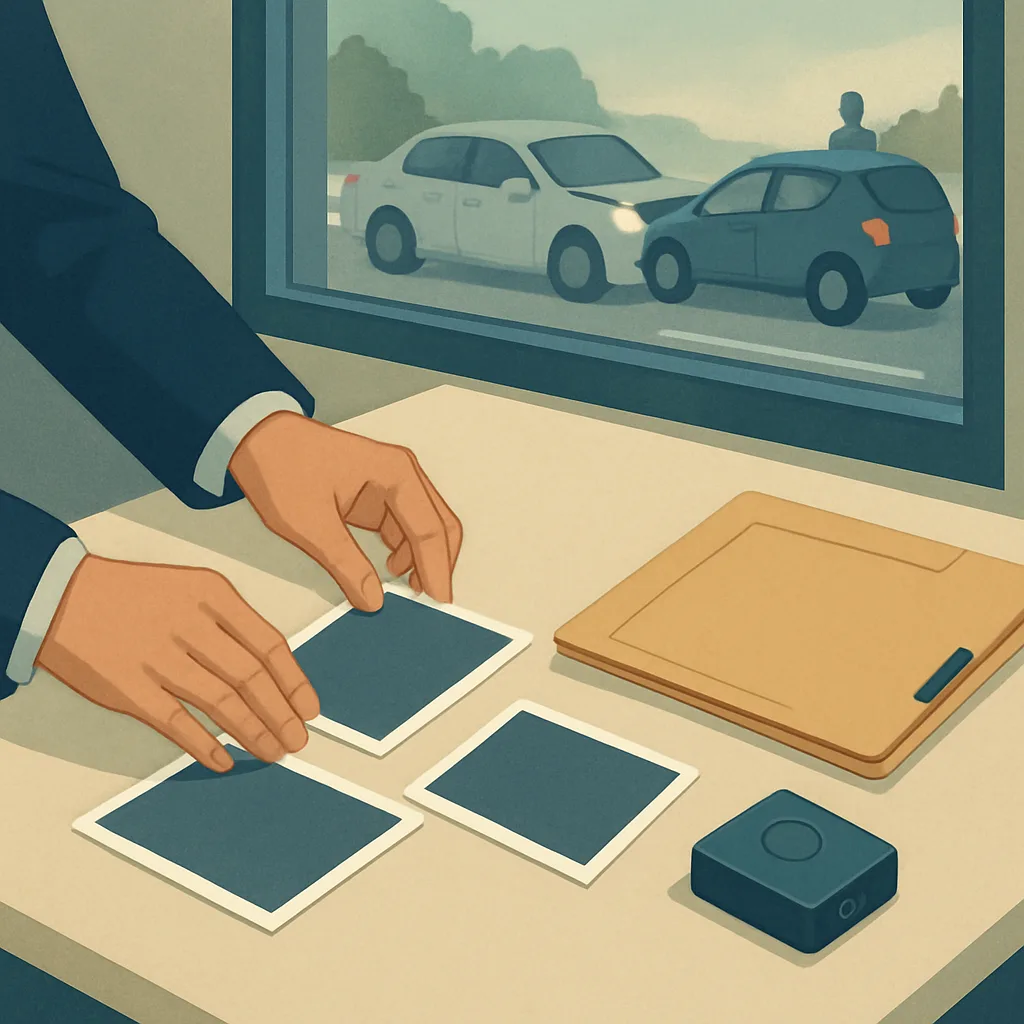
Building a Causation Record After a San Diego Collision
Proving distraction requires more than proving a traffic rule may have been violated. A claim generally needs evidence that the conduct contributed to the impact and the injuries being claimed. Insurance carriers, investigators, and courts may examine the full sequence rather than one isolated fact.
Reports, witnesses, and video
A collision report from the San Diego Police Department, the California Highway Patrol, or another responding agency may record observations, statements, roadway conditions, and citations. Such a report can be important, but it is not necessarily the only or final source of evidence. Witnesses may have observed a driver holding a phone, looking into the back seat, eating, reaching for an object, or failing to respond to stopped traffic.
Surveillance footage can disappear through routine overwriting. A business may retain video for only a limited period, and a camera’s view may show only part of the event. Generally speaking, an attorney can help evaluate where relevant footage may exist and communicate with custodians about preserving it. The injured person should avoid altering, enhancing, or publicly accusing anyone based on an incomplete clip.
Connecting distraction to fault and injury
A strong evidence record may address three connected questions:
- What was the driver doing before the collision?
- Did that conduct reduce the driver’s ability to perceive or respond to the hazard?
- Did the collision cause the injuries and losses being claimed?
For example, a witness who saw a driver looking down moments before a rear-end impact may be more relevant than evidence that the driver used a phone earlier that day. Skid marks, vehicle damage, intersection design, traffic signals, and recorded statements may also help reconstruct timing. In San Diego County, the applicable legal analysis can depend on the facts, available evidence, and issues raised in the claim or court proceeding.
Preserving Evidence and Avoiding Common Mistakes
After a suspected distracted-driving collision, an injured person may be focused on medical care, transportation, and insurance calls. Those concerns are understandable, but early information can become harder to locate as time passes. Generally, preservation means keeping what the person already has and promptly reporting relevant observations—not conducting an independent investigation that invades privacy or creates safety concerns.
Useful steps may include:
- Save original photographs, videos, dashcam files, and messages without editing them.
- Write down what was seen or heard, including approximate timing, road position, traffic conditions, and witness contact information.
- Tell the responding officer and insurance representative what was personally observed, separating direct observations from assumptions.
- Keep vehicle repair estimates, collision photographs, medical records, wage documentation, and communications related to the incident.
- Avoid posting accusations, crash theories, or private information about the other driver on social media.
What not to assume
A delayed admission, a missing phone, or a driver who refuses to discuss phone use does not automatically establish liability. Likewise, a police report that does not mention distraction does not necessarily resolve the issue. Evidence may be incomplete, witnesses may disagree, and California rules concerning privacy, admissibility, comparative responsibility, and deadlines can vary by situation and may change over time.
If a claim is disputed, a San Diego attorney may evaluate whether additional investigation, preservation requests, or formal discovery is appropriate. The process should be handled through lawful channels rather than by attempting to obtain restricted phone records personally.
Frequently Asked Questions
Can a witness’s observation support a distracted-driving injury claim in California?
Yes, a witness’s firsthand observation may be relevant to a distracted-driving claim in California. The value of the account can depend on where the witness was located, what the witness could see, how close the observation was to the impact, and whether other evidence is consistent with it. A witness should report what was actually observed rather than speculate about the driver’s intentions or phone activity.
Does a driver’s phone record automatically prove the driver caused the crash?
No. Phone records may show that a call, message, or data session occurred, but they do not always establish who was using the phone, what was happening at the precise moment of impact, or whether the activity affected driving. Depending on the circumstances, an attorney may compare phone evidence with witness accounts, video, vehicle data, crash damage, and statements to evaluate causation.
What if there is no video of the suspected distracted driving?
A claim does not necessarily fail because no video exists. Other evidence may include eyewitness testimony, statements made at the scene, vehicle or roadway evidence, timing information, and observations recorded by responding personnel. The available proof will depend on the collision. In San Diego, California, an attorney may help assess whether the combined evidence supports a coherent explanation of what happened.
Should I confront the other driver about phone use after a crash?
Confronting another driver may create confusion or conflict and may not produce reliable evidence. It is generally safer to prioritize immediate safety, communicate factual observations to responding personnel, and preserve information already in your possession. Do not access another person’s phone or private accounts. Depending on the circumstances, a lawyer may advise on lawful ways to address disputed evidence.
How Jeffrey Estes Injury Lawyers Can Help
Jeffrey Estes Injury Lawyers is dedicated to helping people understand the evidence and legal issues that may arise after a San Diego, California car accident. The firm can review available photographs, reports, witness information, video leads, vehicle evidence, and communications to help evaluate whether suspected distraction may have contributed to the collision.
The team is committed to fighting for clients’ rights while recognizing that every claim depends on its facts, applicable California law, and available proof. If you are seeking a San Diego distracted driver lawyer, contact Jeffrey Estes Injury Lawyers for a free consultation or case evaluation to discuss your situation and legal options.
The information in this article is for educational purposes only and does not constitute legal advice. Contact a qualified attorney licensed in San Diego, California for advice specific to your situation.