Commercial Vehicle Liability After a Crash
A delivery van turns across traffic. A landscaping truck backs out of a driveway. A rideshare vehicle stops suddenly on a busy San Diego street. When a business-owned or work-used vehicle causes serious harm, commercial vehicle liability can be far more complicated than an ordinary car accident claim.
The driver may have made the immediate mistake, but the driver is rarely the only party with responsibility. Employers, vehicle owners, contractors, maintenance providers, and insurers may all become part of the case. For an injured person, identifying every responsible party is not a technical detail. It can determine whether there is enough insurance coverage to pay for medical care, lost income, and the lasting effects of a catastrophic injury.
What Commercial Vehicle Liability Means
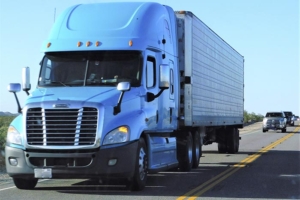
Commercial vehicle liability is the legal responsibility that may arise when a vehicle used for business causes an accident and injuries. The vehicle does not need to be a semi-truck or a company-branded fleet van. It can include construction equipment driven on public roads, buses, delivery vehicles, utility trucks, taxis, rideshare vehicles, cargo vans, and employee-owned cars being used for work.
In many cases, the central question is whether the driver was working at the time of the crash. If an employee was performing job duties, traveling between work sites, making deliveries, carrying company tools, or running an assigned errand, the employer may be legally responsible for the employee’s negligence. This is often called vicarious liability.
That does not mean every work-related collision automatically creates a valid claim against a company. The facts matter. A worker commuting to and from a regular job site may be treated differently from a worker driving between job locations. An independent contractor relationship can also require closer examination. Companies sometimes use contractor labels to distance themselves from responsibility, but the label alone does not decide the issue.
The Driver Is Only the Starting Point
A serious commercial crash should be investigated from the outside in. Start with what the driver did, then examine the system that placed that vehicle on the road.
A driver may be liable for speeding, following too closely, distracted driving, unsafe lane changes, impairment, or failing to yield. But a company may have contributed by hiring an unsafe driver, failing to review driving records, allowing a fatigued employee to work excessive hours, pressuring a driver to meet unrealistic delivery targets, or ignoring known vehicle defects.
These claims can involve separate theories of negligence. Negligent hiring, training, supervision, retention, and vehicle maintenance each focus on a different company failure. A trucking company that puts an unqualified driver behind the wheel presents a different problem than a delivery business that knowingly sends vans out with worn brakes. Both failures can cause devastating injuries, and both may be relevant to compensation.
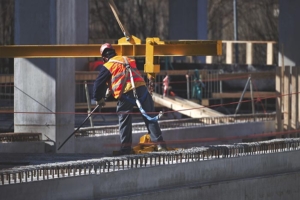
Vehicle ownership also matters. A business that owns, leases, or controls a vehicle may have duties that go beyond the conduct of the person driving it. In a construction vehicle accident, for example, the responsible parties may include the equipment owner, the general contractor, a subcontractor, and the company tasked with maintenance or operation. Sorting out those relationships early is essential.
Evidence Can Disappear Quickly
Commercial cases are often won or lost on evidence that an injured person cannot collect alone from a hospital bed or while dealing with a family emergency. Businesses and insurers may begin their own investigation immediately after a serious collision. Their goal is not necessarily to tell your story. It is to protect the company and limit what the insurer pays.
Useful evidence may include dash-camera footage, vehicle inspection records, electronic driving logs, delivery schedules, GPS data, dispatch communications, cell phone records, training files, maintenance reports, drug and alcohol testing records, and prior safety complaints. The available evidence depends on the type of vehicle and business, but the principle is consistent: records can show whether the crash was truly an isolated driver error or part of a preventable safety failure.
Preserving this material matters because some video systems overwrite footage quickly, and companies may not retain every record forever. Photographs of the scene, damage patterns, skid marks, roadway conditions, witness names, and the responding agency’s report can also become critical. A prompt legal investigation gives an injured person a better opportunity to preserve the facts before they are lost.
Why the Police Report Is Not the Whole Case
A police report can be valuable, but it is not the final word on fault. Officers must often make quick judgments at a chaotic scene. They may not have access to company data, video footage, or internal records that reveal what happened before the impact.
For example, an officer may report that a van driver ran a red light. Later evidence may show the driver had been checking a dispatch app, had worked an excessively long shift, or was driving a poorly maintained vehicle. Those details can change the scope and value of the claim.
Insurance Companies May Look for Ways to Shift Blame
Commercial defendants often carry larger insurance policies than individual drivers. That can be necessary when a company operates heavy vehicles or employs drivers, but it also means the insurer may devote substantial resources to defending the claim.
Adjusters may argue that the injured person contributed to the crash, that the injuries were preexisting, or that treatment was excessive. They may request a recorded statement before the full extent of the injury is known. They may offer an early settlement that sounds significant but fails to account for future surgery, rehabilitation, diminished earning capacity, chronic pain, or the care a family may need for years.
California’s comparative negligence rules can affect recovery if an injured person is found partially at fault. Still, partial fault does not necessarily prevent recovery. The real question is what the evidence shows and whether the company or its insurer is attempting to place more blame on the victim than the facts support.
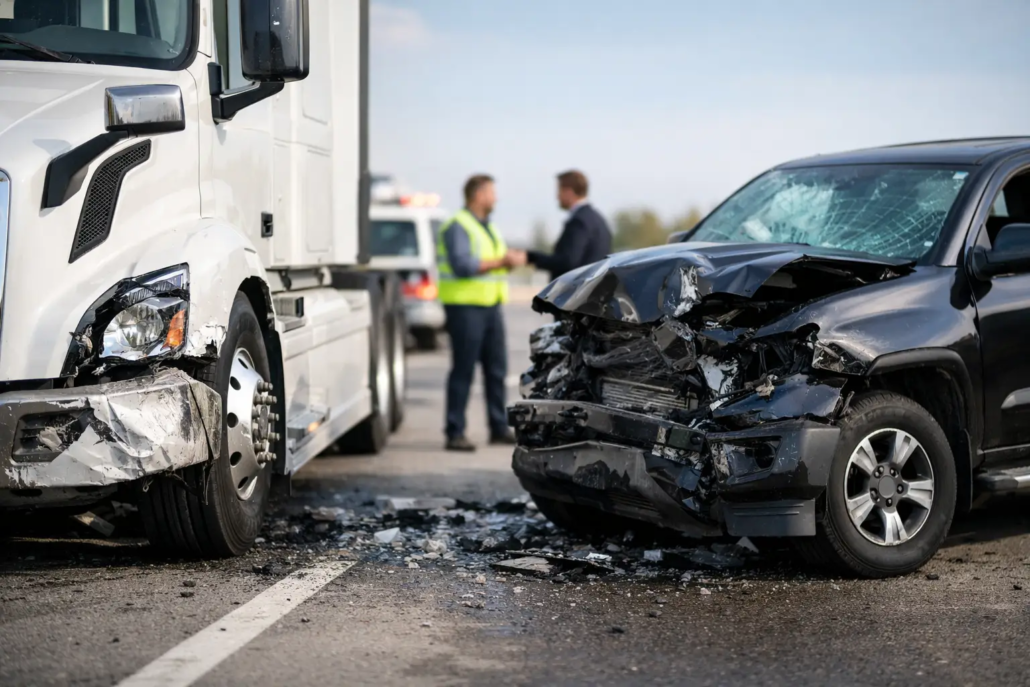
This is especially important in crashes involving pedestrians, motorcyclists, bicyclists, and smaller passenger vehicles. Commercial trucks, buses, and work vehicles can inflict extraordinary force. The severity of an injury is not proof of fault, but it often means the financial stakes are high and the investigation must be thorough.
Damages Should Reflect the Full Harm
A commercial vehicle claim may seek compensation for the losses caused by the collision. These can include emergency treatment, hospitalization, surgery, physical therapy, medication, and future medical needs. An injured person may also seek lost wages, reduced ability to earn income, property damage, and compensation for pain, suffering, disability, and loss of enjoyment of life.
When a crash causes a fatal injury, surviving family members may have a wrongful death claim. The legal and emotional issues are different, but the need for accountability remains. A family should not be forced to accept an insurer’s quick valuation of a loss that cannot be measured by a stack of bills.
The value of a case depends on the injuries, available evidence, insurance coverage, fault, the effect on work and family life, and the strength of the legal claim. No responsible attorney can honestly assign a number without understanding those facts. What matters is building the case around the real consequences of the crash, not the insurer’s preferred version of them.
Steps to Take After a Commercial Vehicle Crash
Get medical attention promptly, even if adrenaline initially masks pain. Follow the treatment plan and keep records of appointments, expenses, symptoms, and time missed from work. If possible, preserve photographs, contact information for witnesses, and any communications from the driver or company.
Avoid guessing about fault in conversations with an insurer or accepting a settlement before you understand the diagnosis and long-term outlook. You are not required to let an insurance company rush the decision while you are still recovering.
An experienced injury attorney can investigate the business relationship, identify applicable insurance policies, preserve evidence, and prepare the claim for negotiation or trial. At Jeffrey Estes Injury Lawyers, injured clients work directly with attorneys who understand that serious cases require serious preparation.
After a commercial vehicle crash, the path forward often begins with a simple but urgent question: who had the power to prevent this from happening? Getting a clear answer can protect your claim and give your family the support needed to focus on recovery.