
How Road Defects Shape Car Accident Claims in San Diego
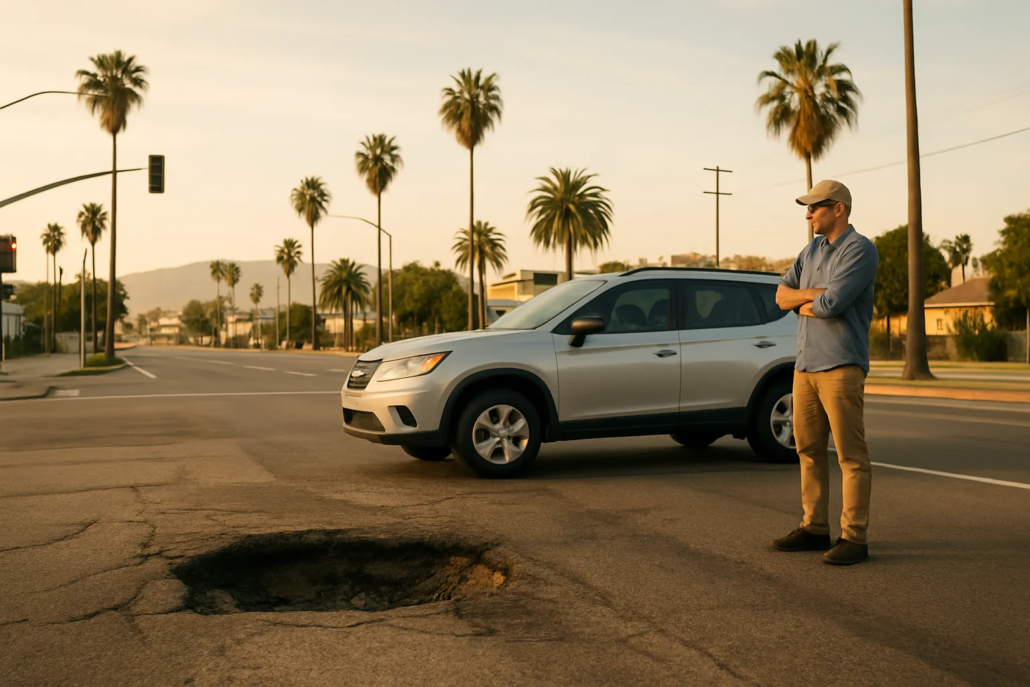
A driver turns onto a familiar San Diego street and suddenly encounters a deep pothole, a dark stretch of roadway, or a traffic signal that does not operate as expected. The resulting impact may cause vehicle damage, injuries, or a chain reaction with other cars. In that situation, can a San Diego road defect cause a car accident claim? In some circumstances, a road condition may become part of a personal injury case, but proving responsibility often requires more than showing that the roadway was unsafe.
A potential claim may depend on what caused the crash, who controlled or maintained the location, whether the condition was known or reasonably discoverable, and whether other factors contributed. Jeffrey Estes Injury Lawyers provides guidance to people evaluating these questions after a collision. This article explains the types of roadway defects that may matter, how to document the scene, how public-entity issues can affect the process, and why medical records and other evidence should be preserved before the condition changes.
When Can a Road Defect Support a San Diego Car Accident Claim?
A roadway defect is not automatically proof of legal liability. Generally speaking, an injured person must connect the condition to the collision and identify a party that may have had a legal duty involving the roadway. The analysis can be complicated when a defect existed for a short time, multiple entities shared responsibilities, or driver conduct also played a role.
Conditions that may contribute to a crash
Examples of potentially significant conditions include:
- Potholes, broken pavement, or uneven lane surfaces that cause a driver to lose control.
- Missing, damaged, or obscured warning signs near a known hazard.
- Defective traffic signals, confusing signal timing, or malfunctioning signal equipment.
- Inadequate lighting that makes a roadway, intersection, pedestrian area, or obstruction difficult to see.
- Drainage problems, debris, or roadway design features that create an unreasonable collision risk.
The key question is usually causation. A vehicle striking a pothole may support a different investigation than a collision allegedly caused by a missing stop sign. Evidence should show where the condition was, how it affected the vehicle or driver, and why the crash occurred when it did.
Who controlled the location?
In San Diego, California, responsibility may involve the City of San Diego, the County of San Diego, the California Department of Transportation, another public agency, a contractor, or a private property owner. A road may cross jurisdictions, and maintenance responsibilities can differ from ownership or design responsibilities. Determining the correct entity is an important early part of evaluating a road defect car accident claim in San Diego.
Documenting the Hazard and Identifying the Responsible Party
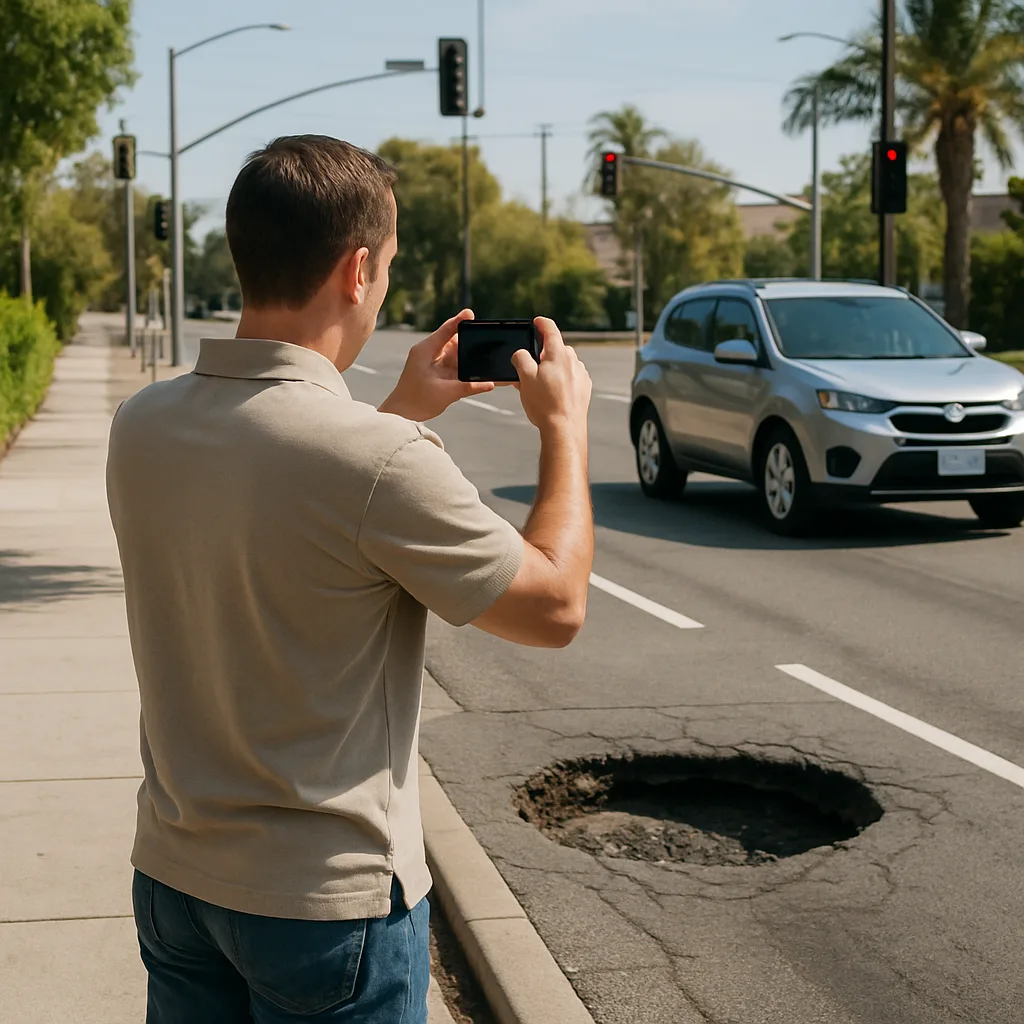
Road conditions can be repaired, repainted, covered, or altered after a collision. Prompt, careful documentation may help preserve a clearer record of what existed at the time. If it is safe to do so, photographs and video should show the defect from several distances, including the surrounding intersection, lane markings, signs, lighting, and traffic-control devices. A close-up alone may not show how a driver encountered the hazard.
Useful information may include:
- The exact location, direction of travel, lane, and approximate time of the crash.
- Weather, visibility, lighting, and traffic conditions.
- Photos of the roadway, nearby signs, signal heads, pavement markings, and vehicle damage.
- Names and contact information for witnesses, when available.
- A copy of the collision report and any incident or service-request number.
- Dashcam footage, phone photographs, vehicle data, and communications with an insurer.
Do not place yourself or another person in danger to obtain evidence. A person who is injured may need to focus first on emergency assistance and medical evaluation. The scene can sometimes be documented later through photographs, witness accounts, public records, maintenance histories, or professional investigation.
Public agencies and California claim procedures
When a public entity may be involved, California procedures can differ from an ordinary claim against a private driver or property owner. California’s Government Claims Act may require a claim to be presented to the appropriate public entity before a lawsuit, and special timing and content rules may apply. The correct entity and procedure depend on the facts and the type of claim; laws and requirements may change.
San Diego motorists may need to determine whether the location is maintained by a city, the county, or the state. A public-records request, roadway maintenance history, prior complaints, inspection records, or work orders may provide useful information, but obtaining and interpreting those materials can take time. An attorney may help evaluate which records and entities are relevant without assuming that a prior complaint, by itself, establishes liability.
Protecting Your Health and Preserving Evidence After the Crash
A road defect case involves more than the condition of the pavement or signal. Injury documentation can help connect the collision to the claimed harm, while vehicle and roadway evidence may help explain how the crash occurred. Medical decisions should be made with qualified healthcare professionals. From a legal perspective, delaying evaluation or failing to follow up can make it more difficult to document the timing and progression of reported symptoms.
Common evidence-preservation steps may include:
- Keeping medical records, bills, discharge paperwork, and work-absence documentation.
- Preserving damaged vehicle parts, photographs, repair estimates, and insurance inspection materials.
- Saving original video files and maintaining backups rather than editing or overwriting them.
- Writing down a factual account of what happened while the events are still relatively fresh.
- Avoiding repairs, disposal, or alterations that could destroy relevant evidence when preservation is reasonably possible.
- Directing questions about fault or a potential settlement to an attorney before making statements that may be misunderstood.
These steps are not a substitute for legal advice, and they do not guarantee that a claim will succeed. California’s comparative-fault rules may affect a case when a public entity, private party, another driver, or the injured person is alleged to have contributed to the collision. For example, disputes may focus on speed, attention, route selection, visibility, vehicle condition, or whether the defect was avoidable. A careful investigation should consider all plausible causes rather than assuming the roadway condition is the only explanation.
An attorney evaluating a dangerous road car accident in San Diego may also consider whether an engineering, maintenance, notice, or design issue is involved. Those issues can require photographs, measurements, witness interviews, roadway records, and consultation with qualified experts. Because a defect may be corrected quickly, early preservation efforts can be especially important.
Frequently Asked Questions
Does a pothole automatically make the government responsible for my crash?
No. A pothole does not automatically establish government liability for a roadway defect. The relevant agency, notice of the condition, the nature of the hazard, causation, and other facts may all matter. A private owner or contractor could also be involved in some settings. California public-entity claims may involve special procedures, so the facts should be reviewed in the proper jurisdiction before assumptions are made.
What if a defective traffic signal caused my San Diego collision?
A malfunctioning or confusing signal may warrant investigation, but the signal condition must generally be connected to the collision. Preserve photographs or video, identify the intersection and signal direction, obtain the collision report, and note witnesses if possible. Signal-maintenance records and reports of prior problems may be relevant. Depending on control of the intersection, a city, county, state agency, or another party may need to be evaluated.
Can poor lighting or a missing sign be part of an injury claim?
Potentially, yes. Poor lighting or a missing warning or regulatory sign may be relevant when it contributed to a collision and a responsible party can be identified. Visibility, weather, traffic, driver conduct, and the location’s design may also affect the analysis. Photographs taken from a driver’s likely approach can help show the visibility issue, but they should be obtained only from a safe location.
How long do I have to pursue a roadway-defect claim in California?
The time available can depend on the defendant, the type of claim, when the injury was discovered, and whether a public entity is involved. Claims against public entities may have additional claim-presentation requirements and shorter deadlines than ordinary injury claims. Because missing a procedural deadline can affect legal rights, a California-licensed attorney can explain the potentially applicable timelines based on the specific facts.
How Jeffrey Estes Injury Lawyers Can Help
Jeffrey Estes Injury Lawyers is dedicated to helping injured San Diego motorists understand the evidence and legal issues that may arise after a roadway-related collision. The firm is committed to fighting for clients’ rights while investigating the roadway condition, potential public or private responsibility, vehicle damage, medical documentation, and other causes that may affect the claim.
The team is ready to evaluate your situation and discuss potential next steps in a consultation. Contact Jeffrey Estes Injury Lawyers for a free case evaluation and to explore your legal options.
The information in this article is for educational purposes only and does not constitute legal advice. Contact a qualified attorney licensed in San Diego, California for advice specific to your situation.








Leave a Reply
Want to join the discussion?Feel free to contribute!